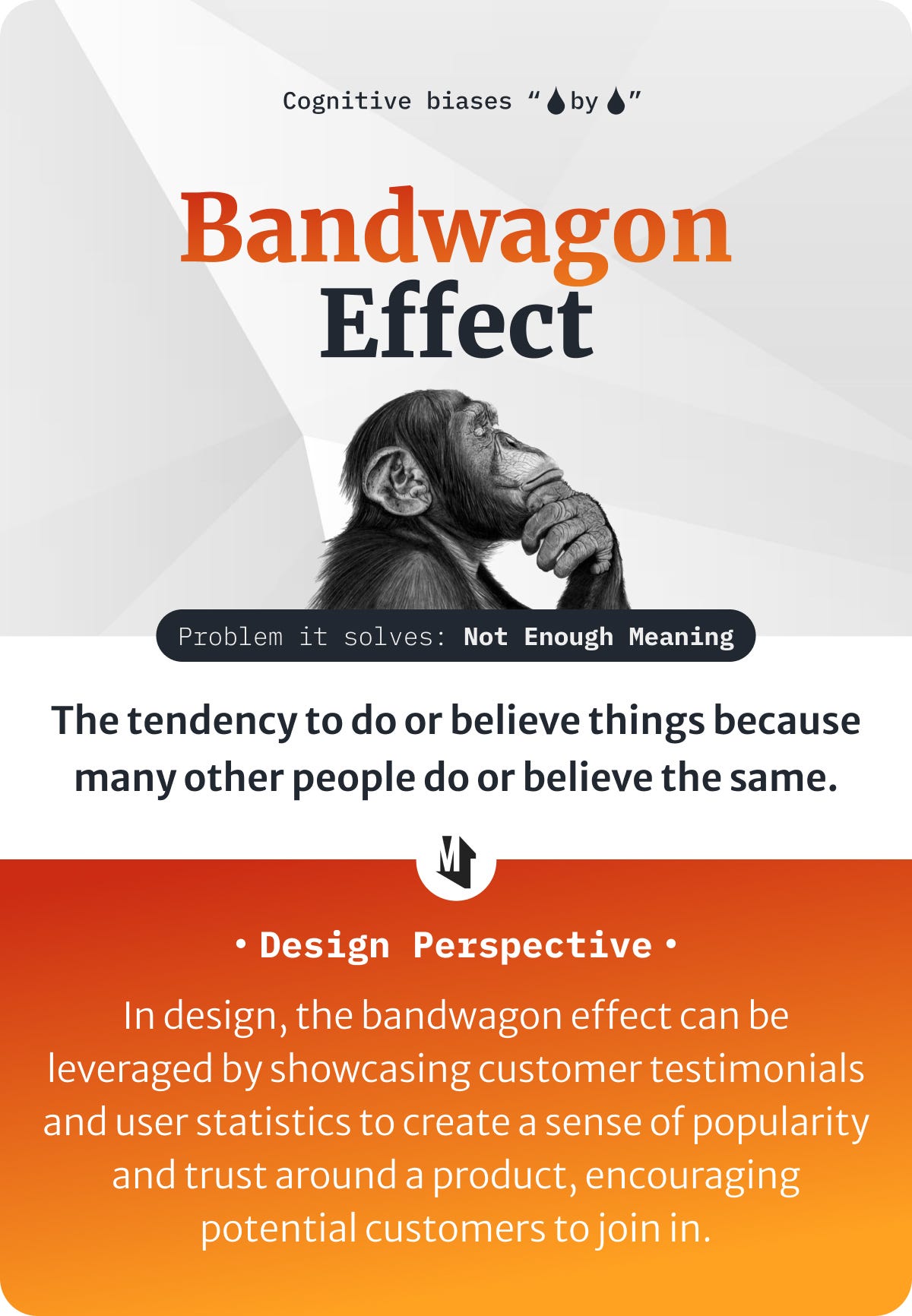
Bandwagon Effect
Psychological phenomenon in which people tend to adopt certain behaviours, beliefs, or trends simply because they see others doing the same, regardless of their personal opinions or preference.

In design, the bandwagon effect can be leveraged to create a sense of popularity and trust around a product or service. Following are some of my favourite examples.
1. Social Proof
In UX design, incorporating social proof elements such as reviews, ratings, and user counts can create a sense of belonging and popularity. For instance, an e-commerce platform can display the number of people who have purchased a particular product ("1,000+ customers have bought this item") to make potential buyers more likely to feel confident about their choice due to the perceived popularity.
2. Limited-Time Offers
Limited-time offers and flash sales capitalize on the bandwagon effect by creating a sense of urgency and scarcity. When marketers emphasize that a product is in high demand or that the offer is available for a limited period, potential customers may be more inclined to make a purchase to avoid feeling left out or missing out on a popular deal.
3. Show User Engagement Metrics
In digital platforms, displaying the number of active users, downloads, or sign-ups can encourage new users to join and participate. For instance, a social networking app could showcase the number of daily active users to convey a sense of a thriving community, enticing new users to join and participate due to the perceived trendiness and widespread adoption.
4. Influencer Endorsements
Influencer marketing capitalizes on the bandwagon effect by using well-known figures to endorse products or services. When influencers promote a product, their followers are more likely to adopt or show interest in it because of the perceived alignment with the influencer's popularity and preferences.
Take Away
In both design and marketing, the bandwagon effect plays a crucial role in shaping consumer behavior and decision-making. By capitalizing on the innate desire to be part of a popular trend, designers and marketers can create compelling experiences that drive engagement, trust, and conversions.